
Table of contents
- AI-powered code analysis in GitLab
- Enhanced AI code review with Graphite Agent
- Frequently Asked Questions
- Summary
From automating reviews to catching bugs early, AI tools significantly enhance traditional code reviews by offering deeper analysis and faster feedback. Below is an exploration of how AI-powered tools can be integrated with GitLab to improve code quality and reduce review cycle times, with a focus on relevant features and examples.
AI-powered code analysis in GitLab
GitLab’s native support for code review automation can be extended using AI-powered solutions. AI-powered code analysis tools integrated with GitLab can scan your codebase for bugs, security vulnerabilities, and coding standard violations. These tools automate much of the manual work involved in code reviews, reducing errors and inconsistencies in the process.
Built-in GitLab automation
GitLab itself offers built-in features that facilitate automated code reviews through its CI/CD pipelines. By defining custom pipeline configurations, you can include various static and dynamic analysis tools that automatically review code commits and merge requests for potential issues.
Here's an example of a simple GitLab CI/CD pipeline configuration that automates the execution of linters and unit tests, which are basic but crucial components of automated code reviews:
stages:- lint- testlint_code:stage: lintscript:- flake8 . # Python linter to check for style and programming errorsonly:- merge_requestsrun_tests:stage: testscript:- pytest # Run unit testsonly:- merge_requests
This configuration ensures that every merge request triggers the linting and testing stages, blocking any changes that fail these checks from being merged into the main branch.
Integrating third-party AI tools
While GitLab provides robust tools for automation, the integration of third-party AI-powered code analysis tools can further enhance this capability. These AI tools can provide more advanced insights, such as predicting the impact of changes on the rest of the system or identifying complex code patterns that could lead to future bugs.
SonarQube: Integrates with GitLab to provide comprehensive code quality analysis, including detailed reports on bugs, vulnerabilities, and code smells. It supports a wide range of programming languages and can be configured to block merges that do not meet predetermined quality thresholds.
Code Climate: Offers automated code review for code quality and complexity insights. It can be integrated directly into GitLab merge requests, providing line-by-line feedback to improve code health and maintainability over time.
Snyk: Primarily focused on security, Snyk can be integrated with GitLab to automatically scan dependencies for vulnerabilities as part of the code review process, providing suggestions for patches and updates to secure your applications.
Benefits of automated code reviews in GitLab
- Consistency: Automated tools apply the same standards to every code review, ensuring that every change adheres to your project's coding guidelines and quality standards.
- Efficiency: Automating the code review process reduces the manual effort required from your team, allowing developers to focus on more complex and creative problem-solving tasks.
- Early bug detection: Automated tools can detect potential issues at the earliest stage of the development process, reducing the cost and effort of addressing bugs later.
- Educational impact: Automated feedback can help developers learn from mistakes and improve their coding practices, leading to better overall code quality.
By leveraging GitLab’s automated code review tools and integrating additional AI-powered analysis tools, teams can significantly enhance the efficiency and effectiveness of their code review processes, fostering a culture of quality and continuous improvement in their development practices.
Enhanced AI code review with Graphite Agent
While GitLab currently doesn't support a direct integration with Graphite Agent, understanding the capabilities of Graphite Agent can provide insights into the potential enhancements that could be realized for interested developers.
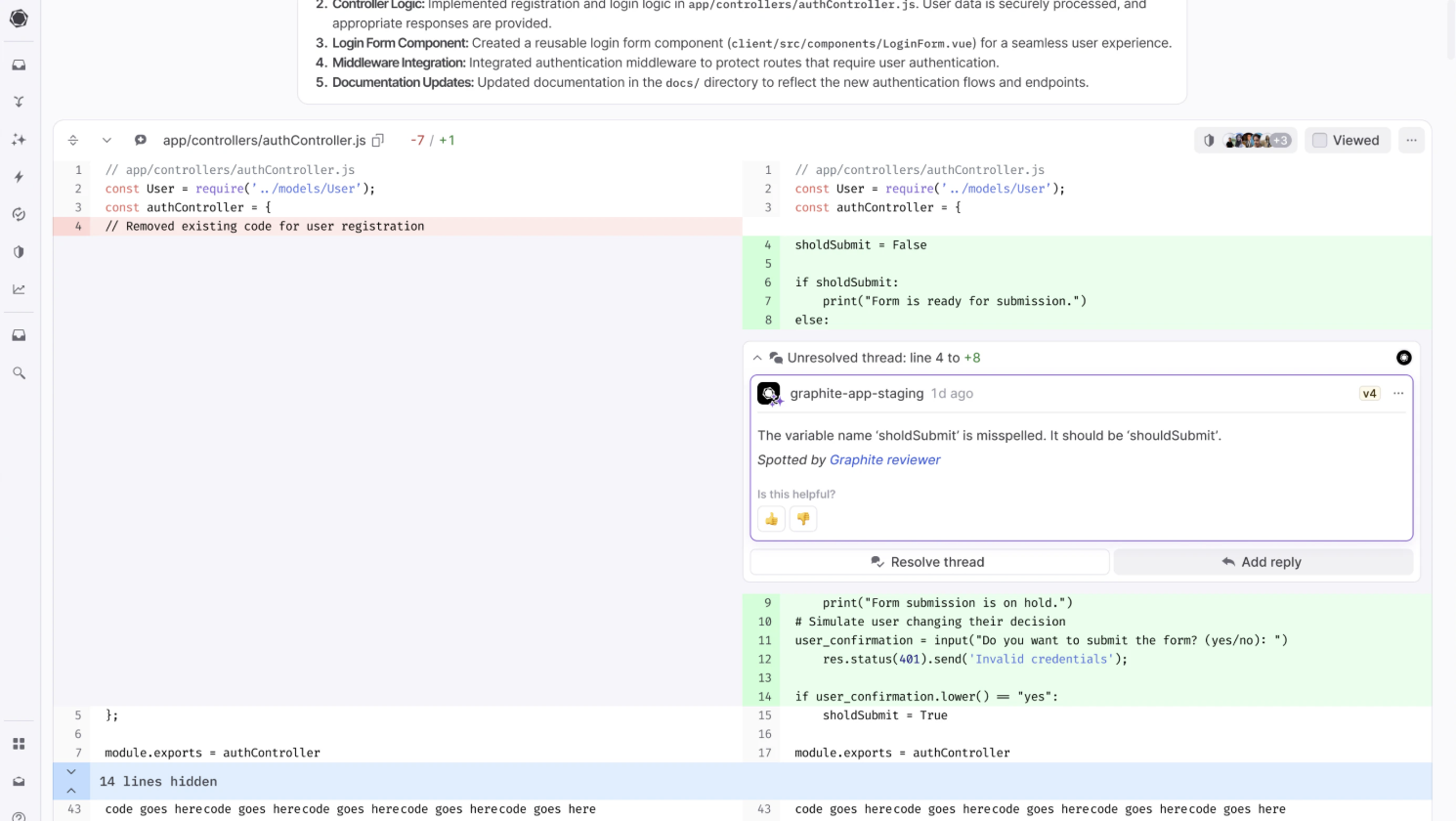
Enhanced code quality: Graphite Agent's AI capabilities, which include codebase-specific feedback and error detection before human review, assists in catching complex bugs and issues that traditional tools might miss.
Efficient review processes: By potentially reducing the noise in code reviews with smarter, targeted feedback, Graphite Agent helps users focus on significant improvements rather than minor nitpicks.
Customizable review standards: Graphite Agent allows for customizable AI prompts and regex rules tailored to specific codebases.
Security and compliance: With Graphite Agent's emphasis on not storing or training on user code, integrating such a tool with GitLab could enhance the security and privacy of the code review process, a critical consideration for many organizations.
Do you use GitHub for your personal projects? Try Graphite Agent and experience intelligent, codebase-specific feedback that catches bugs before human review.
Frequently asked questions
Can AI tools completely replace human code reviewers?
No, AI tools are designed to augment, not replace, human reviewers. They excel at catching common issues, security vulnerabilities, and style violations, but human reviewers are still essential for evaluating architectural decisions, business logic, and providing mentorship to team members.
Will AI code review tools slow down my merge request process?
Initially, there may be a slight increase in pipeline execution time as AI tools analyze your code. However, the time saved by catching issues earlier and reducing the back-and-forth in manual reviews typically results in faster overall merge times and improved developer productivity.
Are AI code review tools secure for private repositories?
Security varies by tool. When evaluating AI code review solutions, look for tools that offer on-premises deployment, don't train on your code, and comply with industry standards like SOC 2 or GDPR. Always review the vendor's security practices and data handling policies before integration.
How much does it cost to implement AI code review tools in GitLab?
Costs vary widely depending on the tool and team size. Some tools like GitLab's built-in features are included in your GitLab subscription, while third-party tools may range from free open-source options to enterprise solutions that cost per user or per repository. Many vendors offer free trials or tiered pricing for different team sizes.
Summary
Integrating AI-powered tools into your GitLab workflows can significantly enhance code quality and streamline the code review process. Whether you’re looking for faster feedback, reduced noise, or customizable rules, AI solutions offer a future-proof approach to improving your codebase.